It's all about ...
plants


Sweet Cherry Tea™ Ninebark
Physocarpus opulifolius 'ZLEBic5'

Height: 4 feet
Spread: 4 feet
Sunlight:


Hardiness Zone: 2b
Brand: Plants Nouveau
Description:
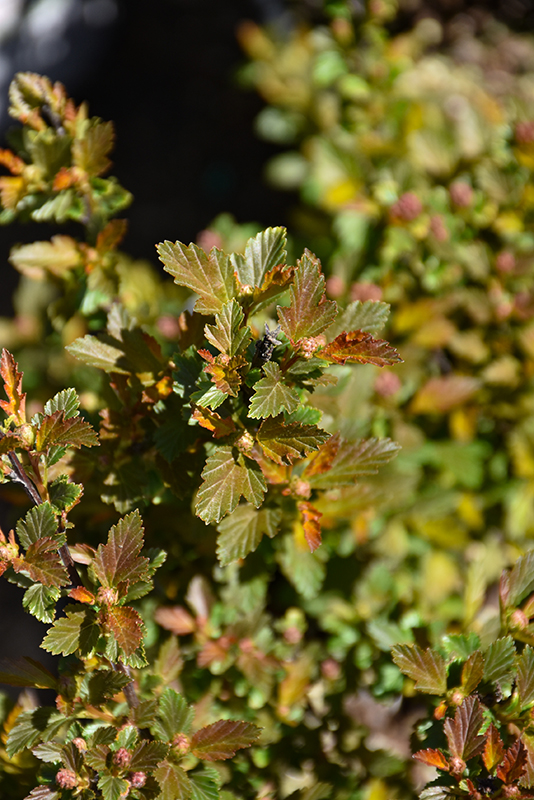
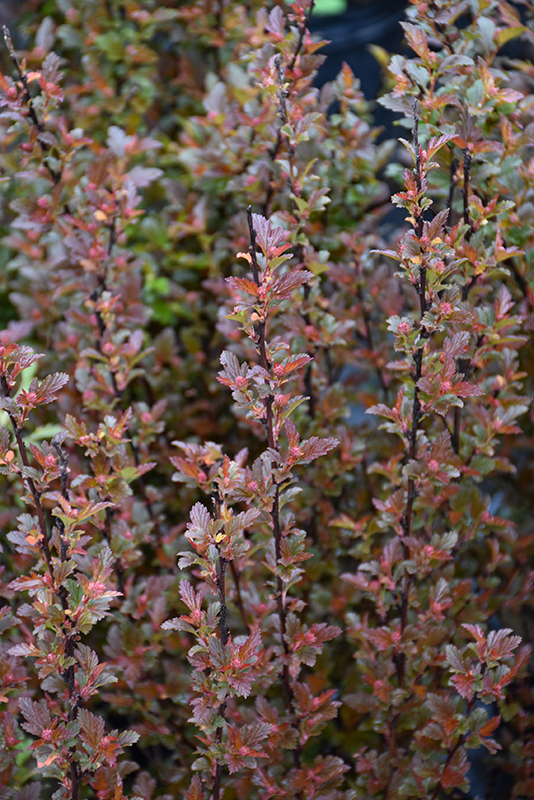
A wonderful compact and free flowering selection presenting rich red-orange foliage early in the season before aging to rich purple in the fall; dark pink buds open to delicate pink flowers in late spring before revealing small red berries; will rebloom
Ornamental Features
Sweet Cherry Tea™ Ninebark features showy clusters of shell pink flowers at the ends of the branches from late spring to early summer, which emerge from distinctive pink flower buds. It has attractive crimson foliage with hints of orange which emerges coppery-bronze in spring. The serrated lobed leaves are highly ornamental and turn an outstanding deep purple in the fall. It produces rose capsules with red overtones from late spring to early summer. The peeling tan bark adds an interesting dimension to the landscape.
Landscape Attributes
Sweet Cherry Tea™ Ninebark is a multi-stemmed deciduous shrub with an upright spreading habit of growth. Its relatively coarse texture can be used to stand it apart from other landscape plants with finer foliage.
This shrub will require occasional maintenance and upkeep, and can be pruned at anytime. It has no significant negative characteristics.
Sweet Cherry Tea™ Ninebark is recommended for the following landscape applications;
- Accent
- Mass Planting
- Hedges/Screening
- General Garden Use
Planting & Growing
Sweet Cherry Tea™ Ninebark will grow to be about 4 feet tall at maturity, with a spread of 4 feet. It has a low canopy. It grows at a medium rate, and under ideal conditions can be expected to live for approximately 30 years.
This shrub does best in full sun to partial shade. It is very adaptable to both dry and moist locations, and should do just fine under average home landscape conditions. This plant will benefit from an application of bonemeal and/or mycorrhizal fertilizer at the time of planting. It is not particular as to soil type or pH. It is highly tolerant of urban pollution and will even thrive in inner city environments. This is a selection of a native North American species. It can be propagated by cuttings; however, as a cultivated variety, be aware that it may be subject to certain restrictions or prohibitions on propagation.