It's all about ...
plants


Little Spooky Hydrangea
Hydrangea paniculata 'GRHPLS'

Height: 20 inches
Spacing: 12 inches
Sunlight:


Hardiness Zone: 3a
Brand: Concept Plants
Description:
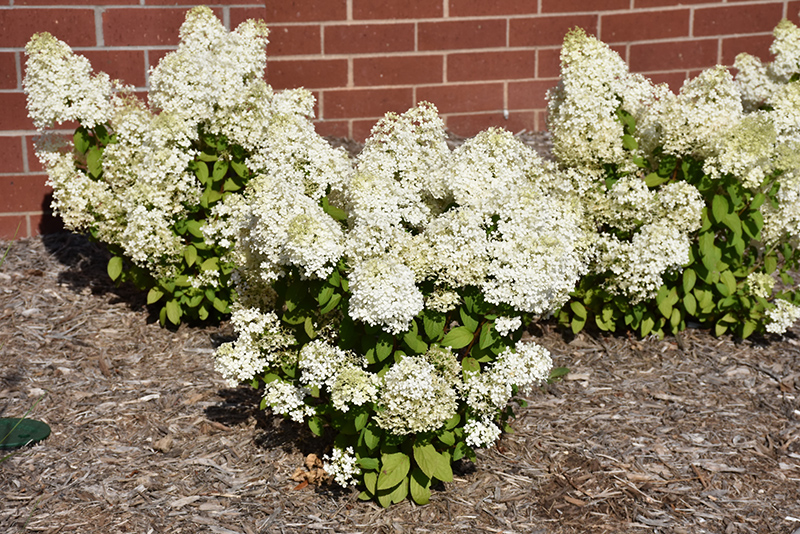
An extremely compact selection with great branching and sturdy stems; tight clusters of blooms are initially green, then open to brilliant white; large blooms and smaller stature make it an ideal choice for smaller landscapes
Ornamental Features
Little Spooky Hydrangea features bold conical white flowers at the ends of the branches from mid summer to late fall, which emerge from distinctive light green flower buds. The flowers are excellent for cutting. It has dark green deciduous foliage. The textured pointy leaves do not develop any appreciable fall colour.
Landscape Attributes
Little Spooky Hydrangea is a multi-stemmed deciduous shrub with a more or less rounded form. Its average texture blends into the landscape, but can be balanced by one or two finer or coarser trees or shrubs for an effective composition.
This shrub will require occasional maintenance and upkeep, and is best pruned in late winter once the threat of extreme cold has passed. It is a good choice for attracting bees and butterflies to your yard. It has no significant negative characteristics.
Little Spooky Hydrangea is recommended for the following landscape applications;
- Accent
- Mass Planting
- General Garden Use
Planting & Growing
Little Spooky Hydrangea will grow to be about 20 inches tall at maturity, with a spread of 12 inches. When grown in masses or used as a bedding plant, individual plants should be spaced approximately 12 inches apart. It tends to fill out right to the ground and therefore doesn't necessarily require facer plants in front. It grows at a medium rate, and under ideal conditions can be expected to live for 40 years or more.
This shrub does best in full sun to partial shade. It prefers to grow in average to moist conditions, and shouldn't be allowed to dry out. To help this plant achive its best flowering performance, periodically apply a flower-boosting fertilizer from early spring through into the active growing season. It is not particular as to soil type or pH. It is highly tolerant of urban pollution and will even thrive in inner city environments. Consider applying a thick mulch around the root zone in winter to protect it in exposed locations or colder microclimates. This is a selected variety of a species not originally from North America.