It's all about ...
plants


California Flannel Bush
Fremontodendron californicum

Height: 18 feet
Spread: 10 feet
Sunlight:

Hardiness Zone: 8b
Other Names: California Fremontia, Flannelbush
Description:
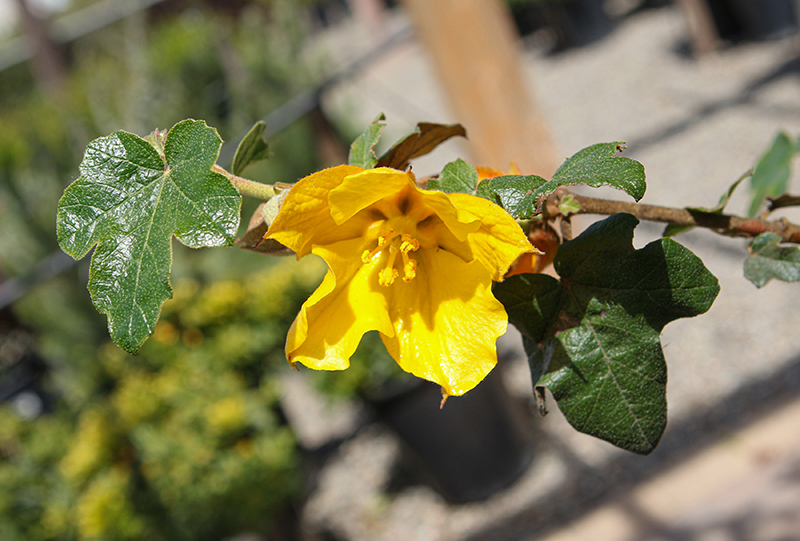
A large, irregularly shaped, fast growing evergreen shrub bearing bright yellow flowers in spring; the fuzz (stellate hairs) on the leaves can be irritating to the skin, so use protective gloves and eyewear when handling; prefers dry to normal conditions
Ornamental Features
California Flannel Bush is covered in stunning lemon yellow cup-shaped flowers along the branches from mid to late spring. It has attractive dark green evergreen foliage. The fuzzy lobed leaves are highly ornamental and remain dark green throughout the winter. The smooth gray bark and red branches add an interesting dimension to the landscape.
Landscape Attributes
California Flannel Bush is an open multi-stemmed evergreen shrub with an upright spreading habit of growth. Its average texture blends into the landscape, but can be balanced by one or two finer or coarser trees or shrubs for an effective composition.
This is a relatively low maintenance shrub, and should only be pruned after flowering to avoid removing any of the current season's flowers. It is a good choice for attracting birds and bees to your yard. It has no significant negative characteristics.
California Flannel Bush is recommended for the following landscape applications;
- Accent
- Hedges/Screening
- General Garden Use
Planting & Growing
California Flannel Bush will grow to be about 18 feet tall at maturity, with a spread of 10 feet. It has a low canopy with a typical clearance of 1 foot from the ground, and is suitable for planting under power lines. It grows at a fast rate, and under ideal conditions can be expected to live for 60 years or more.
This shrub should only be grown in full sunlight. It prefers dry to average moisture levels with very well-drained soil, and will often die in standing water. This plant does not require much in the way of fertilizing once established. It is not particular as to soil pH, but grows best in sandy soils. It is somewhat tolerant of urban pollution. This species is native to parts of North America.
This plant is not reliably hardy in our region, and certain restrictions may apply; contact the store for more information.