It's all about ...
plants


Height: 16 feet
Spread: 8 feet
Sunlight:

Hardiness Zone: (annual)
Other Names: Cabbage on a Stick
Description:
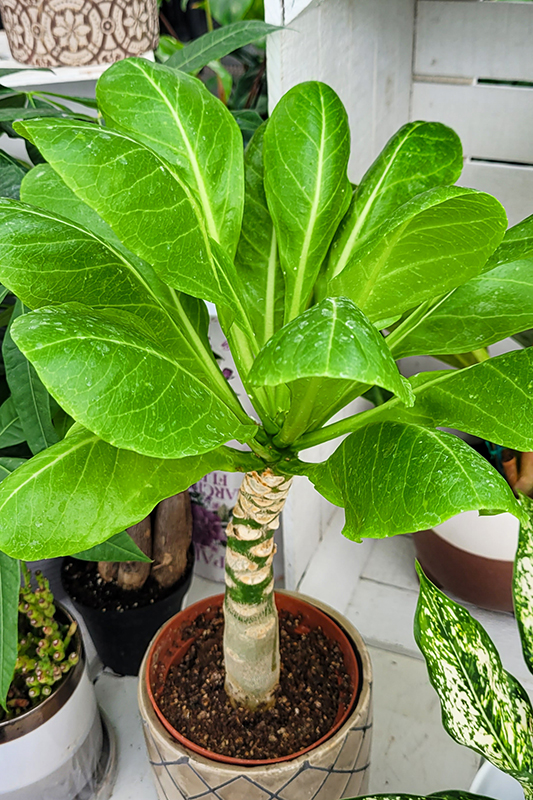
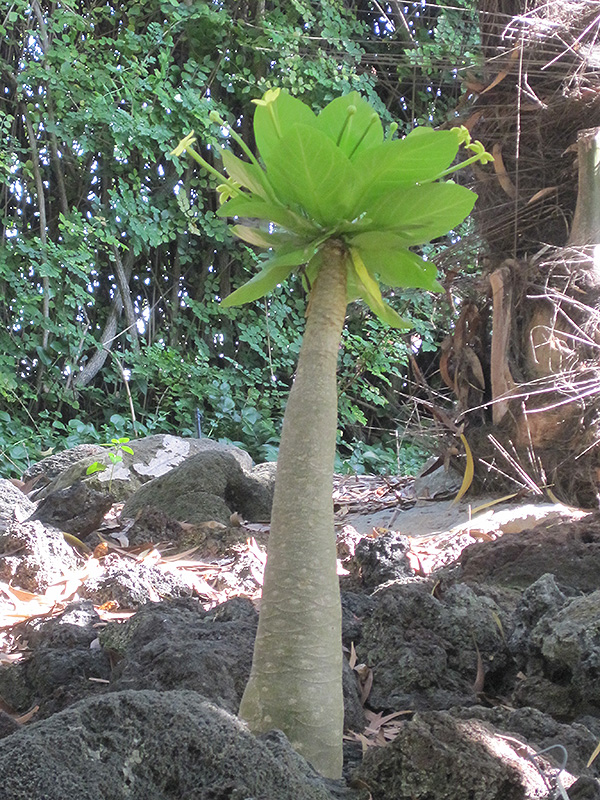
This is a great exotic looking selection that grows quickly and columnar when young, topped with a rosette of long, narrow green leaves; mulch the root area; trunk is green when young and slowly ages to tan; fragrant yellow flowers appear in autumn
Ornamental Features
Hawaiian Palm features showy clusters of fragrant yellow star-shaped flowers at the ends of the stems in mid fall, which emerge from distinctive buttery yellow flower buds. Its attractive narrow palmate leaves remain light green in colour throughout the season.
Landscape Attributes
Hawaiian Palm is an herbaceous annual with an upright spreading habit of growth. Its medium texture blends into the garden, but can always be balanced by a couple of finer or coarser plants for an effective composition.
This is a relatively low maintenance plant, and may require the occasional pruning to look its best. It has no significant negative characteristics.
Hawaiian Palm is recommended for the following landscape applications;
- Accent
- Vertical Accent
Planting & Growing
Hawaiian Palm will grow to be about 16 feet tall at maturity, with a spread of 8 feet. It has a low canopy with a typical clearance of 6 feet from the ground. Although it's not a true annual, this plant can be expected to behave as an annual in our climate if left outdoors over the winter, usually needing replacement the following year. As such, gardeners should take into consideration that it will perform differently than it would in its native habitat.
This plant should be grown in a location with partial shade and which is shaded from the hot afternoon sun. It prefers dry to average moisture levels with very well-drained soil, and will often die in standing water. It is considered to be drought-tolerant, and thus makes an ideal choice for a low-water garden or xeriscape application. It is not particular as to soil type or pH. It is somewhat tolerant of urban pollution. Consider applying a thick mulch around the root zone in both summer and winter to conserve soil moisture and protect it in exposed locations or colder microclimates. This species is not originally from North America.