It's all about ...
plants


American Strawberry Bush
Euonymus americanus

Height: 7 feet
Spread: 8 feet
Sunlight:


Hardiness Zone: 6a
Other Names: Brook Euonymus, Bursting-Heart
Description:
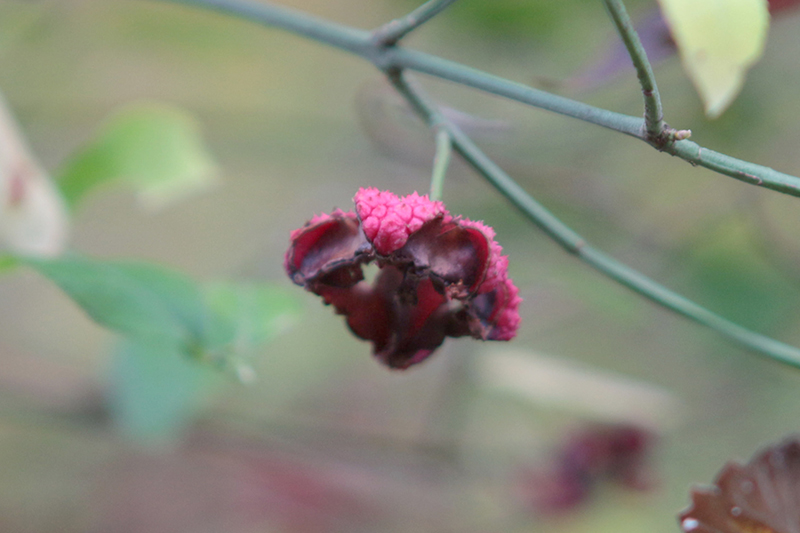
An interesting, airy, deciduous shrub with ridged twigs that become purple in the sun; bright green leaves turn dark red in fall, when bright red fruits open to present bright orange seeds; an excellent native plant for fall color
Ornamental Features
American Strawberry Bush is primarily grown for its highly ornamental fruit. It features abundant showy red capsules with orange tips from early to late fall. It features subtle light green star-shaped flowers with chartreuse overtones along the branches in mid spring. It has light green deciduous foliage. The oval leaves turn an outstanding dark red in the fall. The smooth gray bark and plum purple branches add an interesting dimension to the landscape.
Landscape Attributes
American Strawberry Bush is an open multi-stemmed deciduous shrub with an upright spreading habit of growth. Its relatively fine texture sets it apart from other landscape plants with less refined foliage.
This shrub will require occasional maintenance and upkeep, and is best pruned in late winter once the threat of extreme cold has passed. It is a good choice for attracting bees to your yard. It has no significant negative characteristics.
American Strawberry Bush is recommended for the following landscape applications;
- Mass Planting
- Hedges/Screening
- Naturalizing And Woodland Gardens
Planting & Growing
American Strawberry Bush will grow to be about 7 feet tall at maturity, with a spread of 8 feet. It has a low canopy with a typical clearance of 1 foot from the ground, and is suitable for planting under power lines. It grows at a medium rate, and under ideal conditions can be expected to live for 40 years or more.
This shrub performs well in both full sun and full shade. However, you may want to keep it away from hot, dry locations that receive direct afternoon sun or which get reflected sunlight, such as against the south side of a white wall. It prefers to grow in average to moist conditions, and shouldn't be allowed to dry out. This plant does not require much in the way of fertilizing once established. It is not particular as to soil type or pH. It is somewhat tolerant of urban pollution. This species is native to parts of North America, and parts of it are known to be toxic to humans and animals, so care should be exercised in planting it around children and pets.
This plant is not reliably hardy in our region, and certain restrictions may apply; contact the store for more information.