It's all about ...
plants



Plant Height: 4 inches
Flower Height: 8 inches
Spacing: 15 inches
Sunlight:


Hardiness Zone: 5a
Other Names: Sand Phlox, Cleft Phlox
Brand: Perennial Resource
Description:
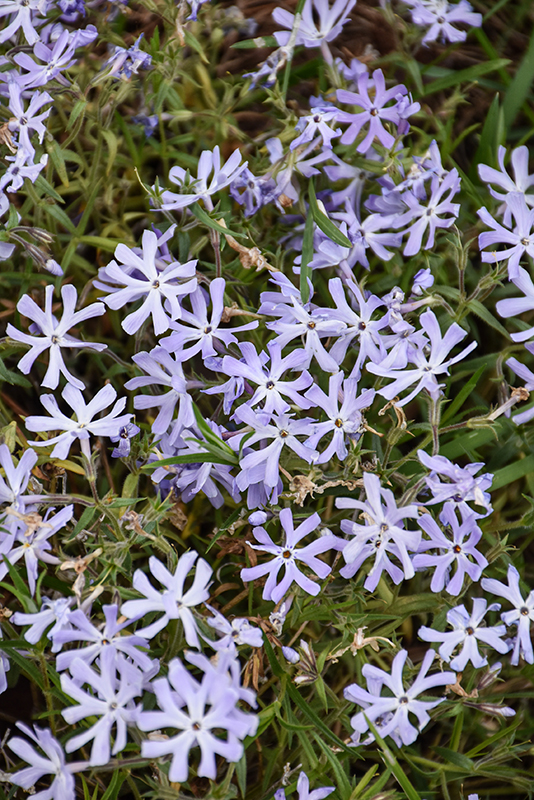
Neat and tidy mounds of green foliage are covered with fragrant, periwinkle blue flowers in the late spring; grows well in rocky ravine areas or well drained, sandy soils; great for beds, border fronts or edging; moderate water requirement
Ornamental Features
Top Notch Phlox is covered in stunning powder blue star-shaped flowers at the ends of the stems in late spring. Its small narrow leaves remain dark green in colour throughout the year.
Landscape Attributes
Top Notch Phlox is an herbaceous evergreen perennial with a ground-hugging habit of growth. It brings an extremely fine and delicate texture to the garden composition and should be used to full effect.
This is a relatively low maintenance plant, and is best cleaned up in early spring before it resumes active growth for the season. Gardeners should be aware of the following characteristic(s) that may warrant special consideration;
- Self-Seeding
Top Notch Phlox is recommended for the following landscape applications;
- Mass Planting
- Rock/Alpine Gardens
- Border Edging
- General Garden Use
- Groundcover
- Naturalizing And Woodland Gardens
Planting & Growing
Top Notch Phlox will grow to be only 4 inches tall at maturity extending to 8 inches tall with the flowers, with a spread of 18 inches. When grown in masses or used as a bedding plant, individual plants should be spaced approximately 15 inches apart. Its foliage tends to remain low and dense right to the ground. It grows at a medium rate, and under ideal conditions can be expected to live for approximately 10 years. As an evegreen perennial, this plant will typically keep its form and foliage year-round.
This plant does best in full sun to partial shade. It is very adaptable to both dry and moist growing conditions, but will not tolerate any standing water. It is considered to be drought-tolerant, and thus makes an ideal choice for a low-water garden or xeriscape application. This plant should not require much in the way of fertilizing once established, although it may appreciate a shot of general-purpose fertilizer from time to time early in the growing season. It is not particular as to soil pH, but grows best in sandy soils. It is somewhat tolerant of urban pollution. This is a selection of a native North American species. It can be propagated by division; however, as a cultivated variety, be aware that it may be subject to certain restrictions or prohibitions on propagation.
This plant is not reliably hardy in our region, and certain restrictions may apply; contact the store for more information.