It's all about ...
plants


Cerise Portulaca
Portulaca grandiflora 'Cerise'

Plant Height: 6 inches
Flower Height: 9 inches
Spacing: 9 inches
Sunlight:


Hardiness Zone: (annual)
Other Names: Moss Rose
Description:
A low growing and spreading selection featuring bright pops of rose-pink flowers over narrow, succulent foliage; tolerates light frost, great for garden beds, borders, groundcover or containers; low maintenance and drought tolerant once established
Ornamental Features
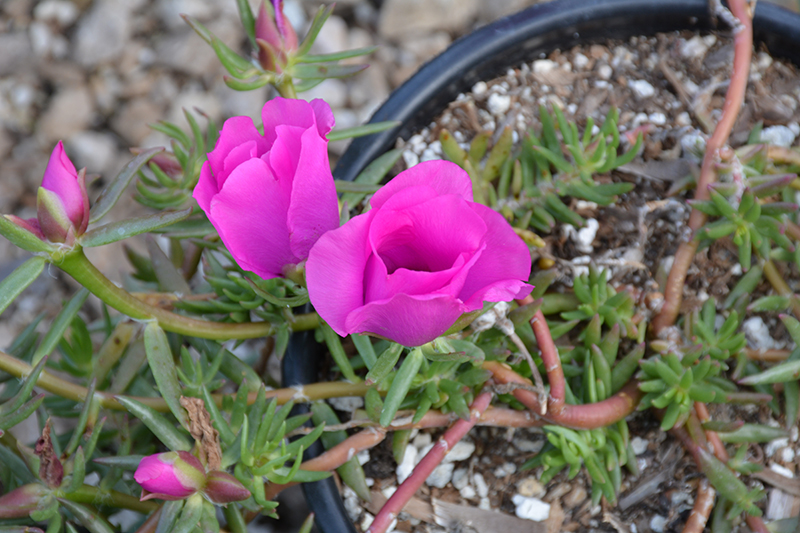
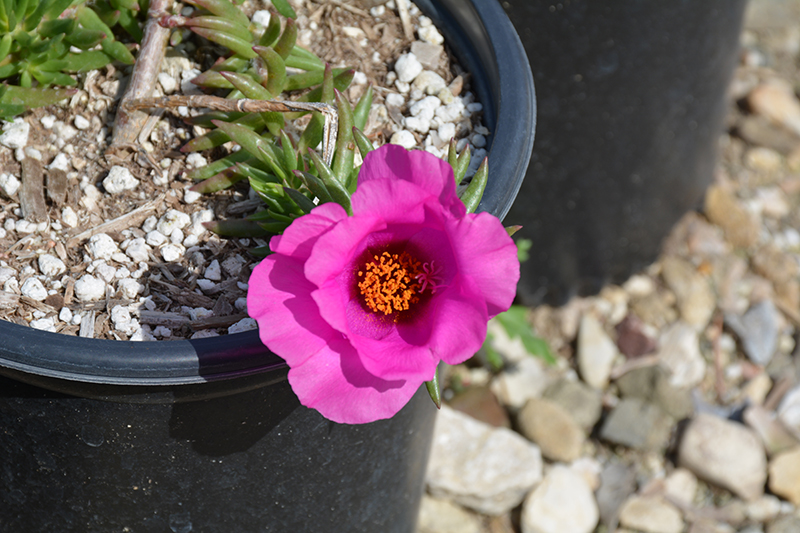
Cerise Portulaca features showy semi-double rose cup-shaped flowers with pink overtones at the ends of the stems from early summer to early fall. Its tiny succulent needle-like leaves remain green in colour throughout the season.
Landscape Attributes
Cerise Portulaca is an herbaceous annual with a ground-hugging habit of growth. It brings an extremely fine and delicate texture to the garden composition and should be used to full effect.
This is a relatively low maintenance plant, and should not require much pruning, except when necessary, such as to remove dieback. It has no significant negative characteristics.
Cerise Portulaca is recommended for the following landscape applications;
- Mass Planting
- Border Edging
- General Garden Use
- Groundcover
- Container Planting
- Hanging Baskets
Planting & Growing
Cerise Portulaca will grow to be only 6 inches tall at maturity extending to 9 inches tall with the flowers, with a spread of 18 inches. When grown in masses or used as a bedding plant, individual plants should be spaced approximately 9 inches apart. Its foliage tends to remain low and dense right to the ground. Although it's not a true annual, this fast-growing plant can be expected to behave as an annual in our climate if left outdoors over the winter, usually needing replacement the following year. As such, gardeners should take into consideration that it will perform differently than it would in its native habitat.
This plant does best in full sun to partial shade. It prefers dry to average moisture levels with very well-drained soil, and will often die in standing water. It is considered to be drought-tolerant, and thus makes an ideal choice for a low-water garden or xeriscape application. This plant should not require much in the way of fertilizing once established, although it may appreciate a shot of general-purpose fertilizer from time to time early in the growing season. It is not particular as to soil pH, but grows best in poor soils, and is able to handle environmental salt. It is highly tolerant of urban pollution and will even thrive in inner city environments. This is a selected variety of a species not originally from North America. It can be propagated by cuttings; however, as a cultivated variety, be aware that it may be subject to certain restrictions or prohibitions on propagation.
Cerise Portulaca is a fine choice for the garden, but it is also a good selection for planting in outdoor containers and hanging baskets. Because of its spreading habit of growth, it is ideally suited for use as a 'spiller' in the 'spiller-thriller-filler' container combination; plant it near the edges where it can spill gracefully over the pot. Note that when growing plants in outdoor containers and baskets, they may require more frequent waterings than they would in the yard or garden.