It's all about ...
plants


Albus Chaste Tree
Vitex agnus-castus 'Albus'

Height: 8 feet
Spread: 8 feet
Sunlight:


Hardiness Zone: 8a
Description:
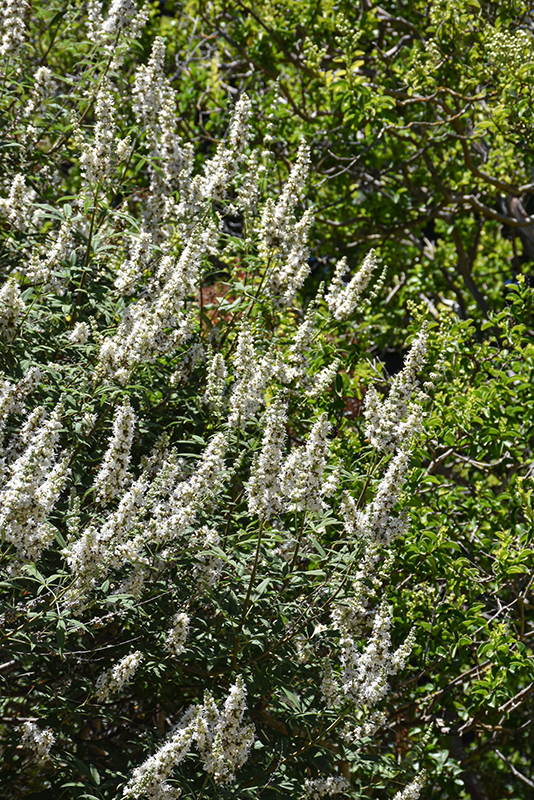
An uncommon garden shrub featuring narrow, airy spikes of white flowers in late summer to early autumn; distinctively palmate-leaves; can be treated like a perennial and cut back each spring, as it flowers on new wood and regrows vigorously
Ornamental Features
Albus Chaste Tree is bathed in stunning panicles of lightly-scented white flowers rising above the foliage from late summer to mid fall. Its fragrant palmate leaves remain green in colour throughout the season.
Landscape Attributes
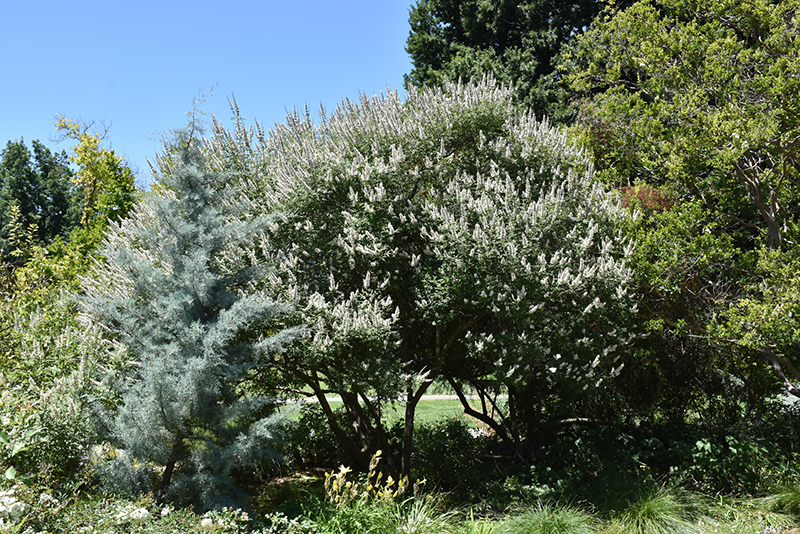
Albus Chaste Tree is an open multi-stemmed perennial with an upright spreading habit of growth. Its relatively fine texture sets it apart from other garden plants with less refined foliage.
This plant will require occasional maintenance and upkeep, and is best cut back to the ground in late winter before active growth resumes. It is a good choice for attracting bees and butterflies to your yard. It has no significant negative characteristics.
Albus Chaste Tree is recommended for the following landscape applications;
- Mass Planting
- Hedges/Screening
- General Garden Use
Planting & Growing
Albus Chaste Tree will grow to be about 8 feet tall at maturity, with a spread of 8 feet. It tends to be leggy, with a typical clearance of 1 foot from the ground, and should be underplanted with lower-growing perennials. Although it is technically a woody plant, this fast-growing plant can be expected to behave as a perennial in our climate if planted outdoors over the winter, usually regrowing from its base (crown) the following year. As such, gardeners should take into consideration that it will perform differently than it would in its native habitat.
This plant does best in full sun to partial shade. It is very adaptable to both dry and moist locations, and should do just fine under typical garden conditions. It is considered to be drought-tolerant, and thus makes an ideal choice for a low-water garden or xeriscape application. This plant should not require much in the way of fertilizing once established, although it may appreciate a shot of general-purpose fertilizer from time to time early in the growing season. It is not particular as to soil type or pH, and is able to handle environmental salt. It is highly tolerant of urban pollution and will even thrive in inner city environments, and will benefit from being planted in a relatively sheltered location. This is a selected variety of a species not originally from North America.
This plant is not reliably hardy in our region, and certain restrictions may apply; contact the store for more information.