It's all about ...
plants


Takeda Nishiki Japanese Summersweet
Clethra barbinervis 'Takeda Nishiki'

Height: 10 feet
Spread: 15 feet
Sunlight:


Hardiness Zone: 6a
Other Names: Variegated Japanese Summersweet, First Snow
Description:
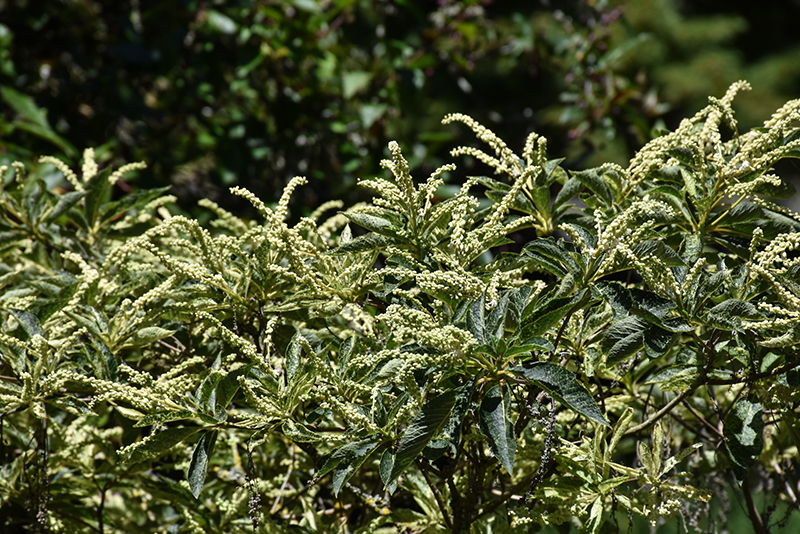
This highly fragrant large shrub or small tree features spikes of sweetly scented white flowers in summer, over green and white variegated leaves that emerge with hints of salmon pink; upright habit of growth; needs rich, moisture retentive soil
Ornamental Features
Takeda Nishiki Japanese Summersweet is draped in stunning clusters of fragrant white flowers at the ends of the branches from early to late summer. It has attractive white-variegated dark green foliage which emerges salmon in spring. The glossy oval leaves are highly ornamental and turn an outstanding yellow in the fall. The peeling khaki (brownish-green) bark is extremely showy and adds significant winter interest.
Landscape Attributes
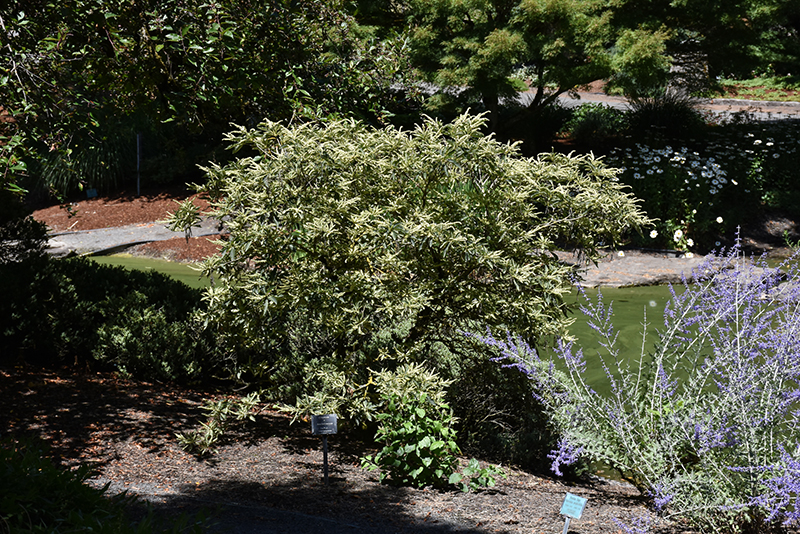
Takeda Nishiki Japanese Summersweet is a multi-stemmed deciduous shrub with an upright spreading habit of growth. Its average texture blends into the landscape, but can be balanced by one or two finer or coarser trees or shrubs for an effective composition.
This shrub will require occasional maintenance and upkeep, and is best pruned in late winter once the threat of extreme cold has passed. It is a good choice for attracting birds, bees and butterflies to your yard. Gardeners should be aware of the following characteristic(s) that may warrant special consideration;
- Suckering
Takeda Nishiki Japanese Summersweet is recommended for the following landscape applications;
- Accent
- Hedges/Screening
- General Garden Use
- Container Planting
Planting & Growing
Takeda Nishiki Japanese Summersweet will grow to be about 10 feet tall at maturity, with a spread of 15 feet. It has a low canopy with a typical clearance of 1 foot from the ground, and is suitable for planting under power lines. It grows at a medium rate, and under ideal conditions can be expected to live for approximately 30 years.
This shrub performs well in both full sun and full shade. It is quite adaptable, prefering to grow in average to wet conditions, and will even tolerate some standing water. This plant should not require much in the way of fertilizing once established, although it may appreciate a shot of general-purpose fertilizer from time to time early in the growing season. It is not particular as to soil pH, but grows best in rich soils. It is highly tolerant of urban pollution and will even thrive in inner city environments. Consider applying a thick mulch around the root zone in winter to protect it in exposed locations or colder microclimates. This is a selected variety of a species not originally from North America.
Takeda Nishiki Japanese Summersweet makes a fine choice for the outdoor landscape, but it is also well-suited for use in outdoor pots and containers. Its large size and upright habit of growth lend it for use as a solitary accent, or in a composition surrounded by smaller plants around the base and those that spill over the edges. It is even sizeable enough that it can be grown alone in a suitable container. Note that when grown in a container, it may not perform exactly as indicated on the tag - this is to be expected. Also note that when growing plants in outdoor containers and baskets, they may require more frequent waterings than they would in the yard or garden. Be aware that in our climate, most plants cannot be expected to survive the winter if left in containers outdoors, and this plant is no exception. Contact our experts for more information on how to protect it over the winter months.
This plant is not reliably hardy in our region, and certain restrictions may apply; contact the store for more information.