It's all about ...
plants


Ruby Throat Red Porterweed
Stachytarpheta mutabilis 'Ruby Throat Red'

Plant Height: 3 feet
Flower Height: 4 feet
Spacing: 30 inches
Sunlight:


Hardiness Zone: (annual)
Other Names: Red Snakeweed, False Vervain
Description:
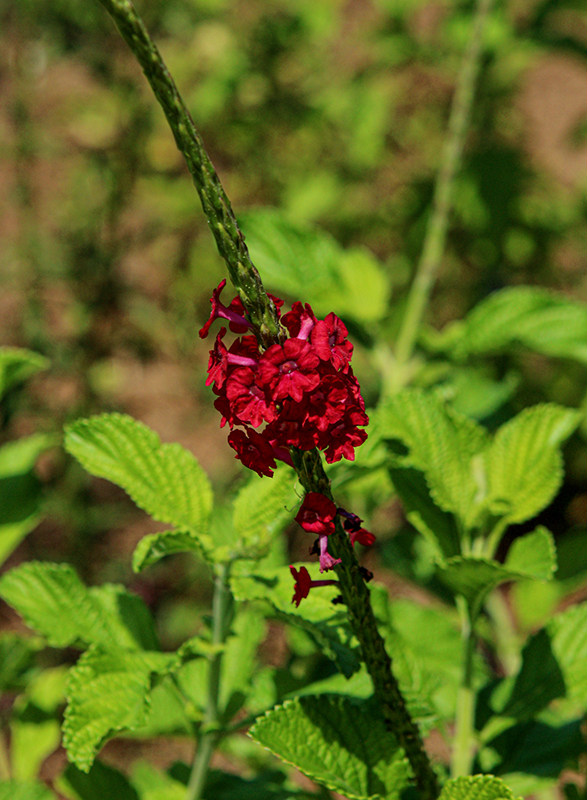
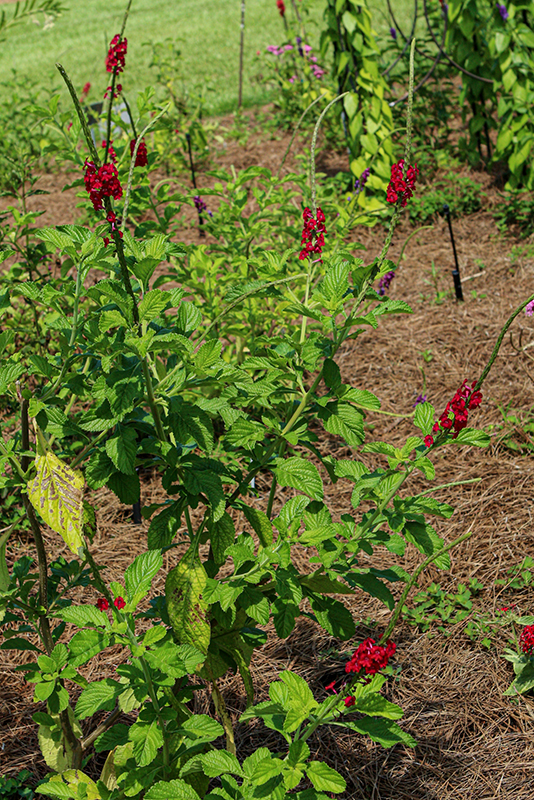
A low growing perennial or sub-shrub, presenting spikes of bright red flowers with ruby throats, appearing in spring to fall above dark green glossy foliage; an excellent addition to butterfly gardens, attracting many species; use as an informal low hedge
Ornamental Features
Ruby Throat Red Porterweed features dainty spikes of red trumpet-shaped flowers with ruby-red throats rising above the foliage from early winter to late fall. Its serrated oval leaves remain dark green in colour throughout the year.
Landscape Attributes
Ruby Throat Red Porterweed is an herbaceous annual with an upright spreading habit of growth. Its medium texture blends into the garden, but can always be balanced by a couple of finer or coarser plants for an effective composition.
This is a relatively low maintenance plant, and is best cleaned up in early spring before it resumes active growth for the season. It is a good choice for attracting bees, butterflies and hummingbirds to your yard. Gardeners should be aware of the following characteristic(s) that may warrant special consideration;
- Spreading
- Self-Seeding
Ruby Throat Red Porterweed is recommended for the following landscape applications;
- Mass Planting
- Hedges/Screening
- General Garden Use
- Groundcover
- Naturalizing And Woodland Gardens
- Container Planting
Planting & Growing
Ruby Throat Red Porterweed will grow to be about 3 feet tall at maturity extending to 4 feet tall with the flowers, with a spread of 3 feet. When grown in masses or used as a bedding plant, individual plants should be spaced approximately 30 inches apart. Its foliage tends to remain dense right to the ground, not requiring facer plants in front. Although it's not a true annual, this fast-growing plant can be expected to behave as an annual in our climate if left outdoors over the winter, usually needing replacement the following year. As such, gardeners should take into consideration that it will perform differently than it would in its native habitat.
This plant does best in full sun to partial shade. It is very adaptable to both dry and moist growing conditions, but will not tolerate any standing water. It is considered to be drought-tolerant, and thus makes an ideal choice for a low-water garden or xeriscape application. To help this plant achive its best flowering performance, periodically apply a flower-boosting fertilizer from early spring through into the active growing season. It is not particular as to soil type or pH, and is able to handle environmental salt. It is somewhat tolerant of urban pollution. This is a selected variety of a species not originally from North America. It can be propagated by cuttings; however, as a cultivated variety, be aware that it may be subject to certain restrictions or prohibitions on propagation.
Ruby Throat Red Porterweed is a fine choice for the garden, but it is also a good selection for planting in outdoor pots and containers. With its upright habit of growth, it is best suited for use as a 'thriller' in the 'spiller-thriller-filler' container combination; plant it near the center of the pot, surrounded by smaller plants and those that spill over the edges. It is even sizeable enough that it can be grown alone in a suitable container. Note that when growing plants in outdoor containers and baskets, they may require more frequent waterings than they would in the yard or garden.